On This Page
Key Facts
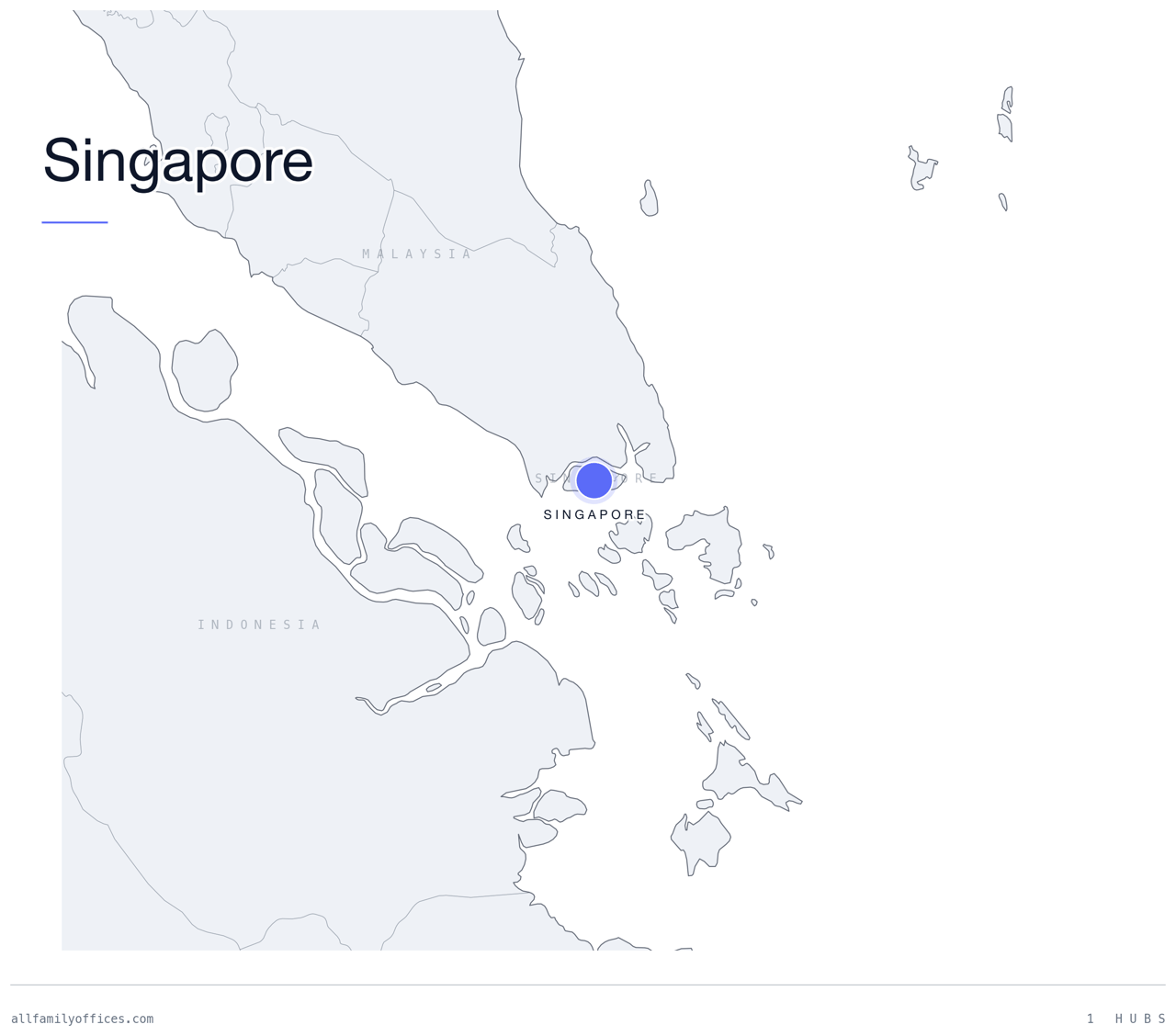
- Singapore hosts 726 tracked single family offices (SFOs) as of January 2026, making it the densest family office hub in Asia.
- SFOs based in Singapore have collectively invested more than $355 billion in over 9,092 funding rounds, backing more than 1,500 companies worldwide.
- The Monetary Authority of Singapore (MAS) approved more than 100 new family office applications in just the first four months of 2022, following 400 offices established in 2020 alone.
- Entry-level wealth thresholds for Singapore family office forums and networks typically start at $120 million to $150 million in assets under management (AUM).
- Late-stage capital deployment accounts for the largest share at $109 billion in 872 rounds over the past five years.
- Billionaire principals including Sergey Brin, James Dyson, and Ray Dalio operate SFOs from Singapore.
- Multi-family offices (MFOs) such as Golden Alpha (40 years old) and Raffles Family Office serve ultra-high-net-worth (UHNW) families who prefer shared platforms over standalone operations.
Singapore's Family Office Landscape
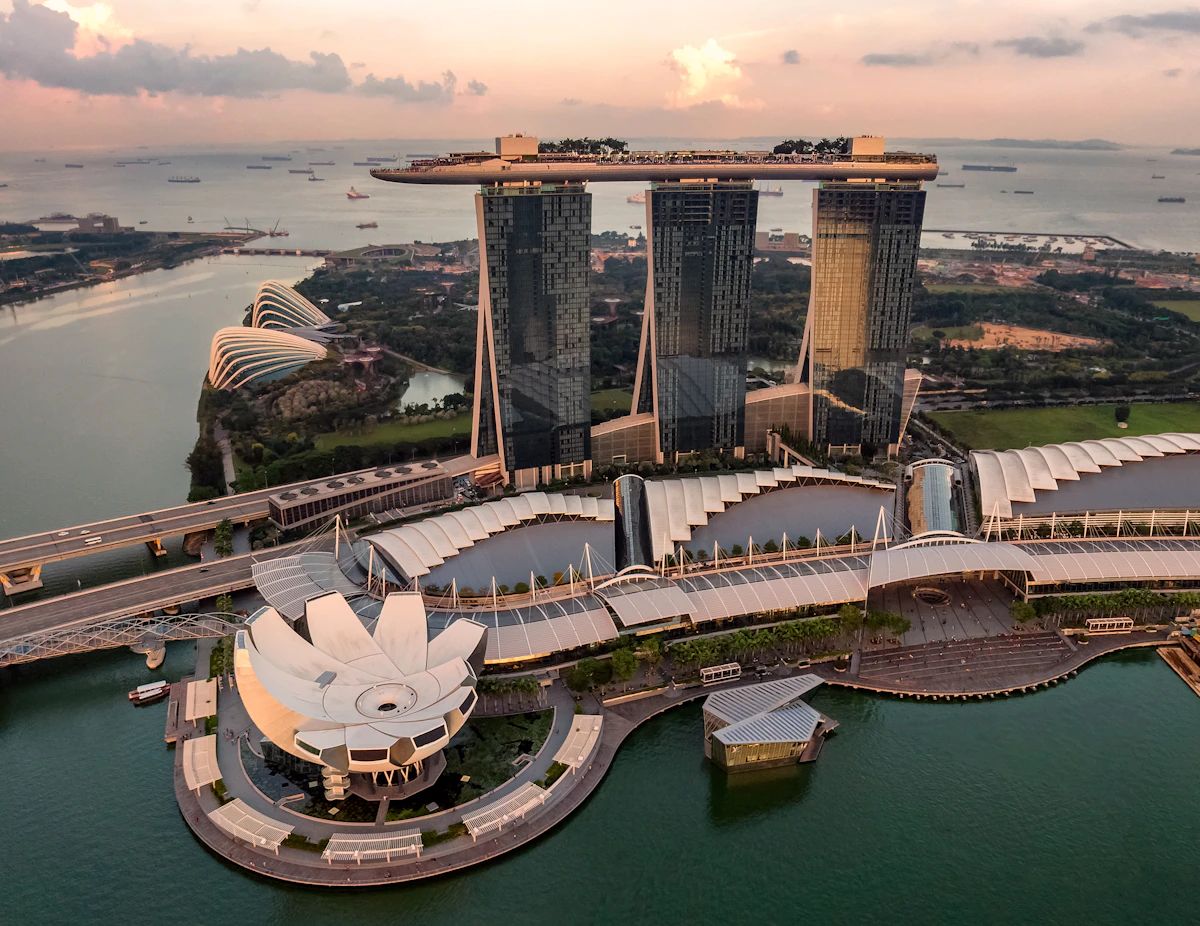
Singapore has cemented its position as Asia's premier family office destination through low personal and corporate tax rates, political stability, and regulatory clarity from MAS. The city-state's Family Office Development Team (FODT), a joint initiative between MAS and the Economic Development Board (EDB), actively recruits global wealth holders. Three tax incentive schemes drive much of the inflow: Section 13O (offshore fund exemption), Section 13U (enhanced tier requiring S$50 million in fund size), and the Variable Capital Company (VCC) structure for flexible fund management.
Growth has been explosive. In 2020, 400 family offices were established in Singapore. By the end of 2021, the total exceeded 700. As of early 2026, industry data tracks 726 SFOs alone, with at least 10 notable MFOs operating alongside them.
Cross-border wealth migration from China, India, the United Kingdom, South Africa, and the United States continues to accelerate. Families choose Singapore over competing hubs like Hong Kong, Dubai, and Switzerland for its regulatory predictability and tax efficiency.
The SFO model dominates, but MFOs fill a critical gap. Families with $120 million to $500 million in assets often find that building a standalone office is cost-prohibitive given local talent costs and compliance requirements. MFOs like Golden Alpha, Iconiq Capital, and Lighthouse Canton provide shared systems for wealth management, estate planning, and portfolio oversight. This split creates a two-tier market where billionaire-backed SFOs pursue direct investments while MFOs offer diversified, advisory-led wealth preservation.
Family Office Comparison at a Glance
Most family offices in Singapore do not publicly disclose their AUM. Bayshore Global Management is the only office in this list with a published figure: $100 billion firm-wide, according to Dakota's 2024 ranking of California family offices (Bayshore is headquartered in California). The table below reflects verified data from public filings and industry directories.
| Family Office | Type | AUM Estimate | Investment Focus | Notable Detail | Founded |
|---|---|---|---|---|---|
| Bayshore Global Management | SFO | $100B (firm-wide) | Technology, ESG, sustainable ventures | Sergey Brin's family office; Tesla, 23andMe stakes | 2020 |
| LionRock Capital | SFO | Undisclosed | Enterprise apps, retail, 18+ sectors | 28 portfolio companies; Series A–C focus | 2009 |
| Weybourne Group | SFO | Undisclosed | Technology, diversified | James Dyson's family office | 2019 |
| Dalio Family Office | SFO | Undisclosed | Diversified, charitable giving | Ray Dalio; HQ in Westport, CT | 2020 |
| Oppenheimer Generations Asia | SFO | Undisclosed | Southeast Asia, Africa | De Beers family; $5.1B exit in 2011 | 2021 |
| Tsao Pao Chee Group | SFO | Undisclosed | Real estate, M&A, multi-sector | 120+ year family enterprise, 4th generation | ~1900 |
| RNT Associates | SFO | Undisclosed | Enterprise apps, consumer, 14+ sectors | 14 portfolio companies | 2009 |
| AT Capital Group | SFO | Undisclosed | Enterprise apps, retail, 11+ sectors | 13 portfolio companies | 2009 |
| HCL Capital | SFO | Undisclosed | Healthcare, resources, real estate | Malaysian family, alternative investments | 2012 |
| Khattar Holdings | SFO | Undisclosed | FinTech, gaming | Sector-focused since 1975 | 1975 |
| Golden Alpha | MFO | Undisclosed | Multi-strategy | Singapore's oldest MFO (40 years) | ~1986 |
| Raffles Family Office | MFO | Undisclosed | Multi-strategy | Asia-focused MFO platform | ~2016 |
| Lighthouse Canton | MFO | Undisclosed | Multi-strategy | Cross-border advisory | ~2016 |
Bayshore's $100 billion is a firm-wide figure for an office headquartered in California, not for its Singapore branch alone. The concentration of undisclosed AUM figures reflects the privacy-first culture that defines this market. Families evaluating these offices should expect to verify capital managed and track records through direct engagement or peer-to-peer industry networks.
Top Picks by Strategy
- Largest Reported AUM: Bayshore Global Management, with $100 billion firm-wide according to Dakota, managing Google co-founder Sergey Brin's wealth through technology and ESG-focused strategies
- Deepest Portfolio by Deal Count: LionRock Capital, holding 28 portfolio companies in 18+ sectors, the most active SFO investor tracked in Singapore
- Best for Multi-Family Services: Golden Alpha, operating for 40 years as Singapore's longest-running MFO with institutional-grade shared services
- Strongest Legacy Office: Tsao Pao Chee Group, a 120+ year family enterprise now in its fourth generation, spanning real estate and M&A
- Leading Cross-Border Investor: Oppenheimer Generations Asia, deploying capital into Southeast Asia and Africa backed by the $5.1 billion De Beers exit
- Most Diversified Sector Spread: RNT Associates, covering 14+ sectors from consumer to enterprise applications with 14 portfolio companies
- Top FinTech and Gaming Specialist: Khattar Holdings, making focused sector bets in fintech and gaming since 1975
- Best for Seed-Stage VC Access: Click Ventures, a Singapore and Hong Kong SFO dedicated to backing emerging seed-stage venture capital funds globally
Top Wealth Platforms in Singapore in Detail
Bayshore Global Management
Bayshore manages Google co-founder Sergey Brin's wealth from California, and Dakota's 2024 ranking of California family offices puts it at $100 billion, the largest figure for any office on this list. Its Singapore branch opened in late 2020, expanding the office's global footprint beyond North America. Bayshore invests heavily in technology and has broadened into ESG-compliant strategies, reflecting Brin's focus on sustainable ventures. Known holdings include stakes in Tesla and 23andMe.
Families and fund managers seeking co-investment with a tech-oriented, impact-minded principal will find Bayshore among the most relevant SFOs in the region. The office's scale and founder profile give it access to deal flow that smaller firms rarely see.
LionRock Capital
With 28 companies in 18+ sectors, LionRock operates more like an active venture investor than a passive wealth vehicle. No other SFO in Singapore matches this portfolio breadth. Capital flows into enterprise applications, retail, consumer, and beyond, reaching India, the United States, and three additional markets.
LionRock focuses on Series A through Series C rounds, filling a gap between seed-stage offices and late-stage institutional capital. Anthony Sawtell, LionRock's Chief Investment Officer, co-chairs a leading family office peer-network committee, giving the office direct influence on Singapore's deal flow ecosystem.
Weybourne Group
James Dyson brought British industrial wealth to Singapore in 2019 through this SFO. Weybourne manages a technology-focused, diversified portfolio for the Dyson family, whose fortune stems from the global vacuum and engineering brand. Dyson's initial relocation included a $47.8 million penthouse purchase at Guoco Tower, though he has since split time with the UK.
Weybourne's value lies in its blend of industrial know-how and technology allocations. Deep tech and engineering ventures seeking patient, founder-led capital will find this office a natural partner.
Dalio Family Office
Ray Dalio, founder of Bridgewater Associates, opened a Singapore branch in 2020. The office supports diversified capital deployment and the family's charitable giving programs through Dalio Philanthropies. While the main operation runs from Westport, Connecticut, the Singapore presence gives the family direct exposure to Asian markets and regulatory advantages.
Venture-stage companies aligned with Dalio's macro-economic worldview may find this office receptive to patient, thesis-driven allocation. The mandate blends investment returns with social impact.
Oppenheimer Generations Asia
The De Beers diamond dynasty deployed its Singapore unit in 2021 as a gateway for Southeast Asian and African investments. Nicholas Oppenheimer and his son Jonathan channel capital into two of the world's fastest-growing regions. The family sold its 40% stake in De Beers to Anglo American for $5.1 billion in 2011, freeing significant capital for private deals.
Edoardo Collevecchio, Managing Director, led the global expansion of family office operations after the De Beers exit. Entrepreneurs and fund managers building ventures that bridge Asia and Africa will find this office strategically aligned.
Tsao Pao Chee Group
A 120+ year family enterprise tracing its roots to the Qing Dynasty, the Tsao Pao Chee Group now operates under fourth-generation Chairman Chavalit Frederick Tsao. The group spans real estate, M&A, and corporate development. James Ong, Chief Strategy Officer, oversees all deal activity.
The Tsao family's multi-generational track record of wealth preservation and succession planning makes this office a case study in family governance. It stands apart from billionaire newcomers by offering generational continuity rather than founder-era risk appetite.
Raffles Family Office
Raffles serves UHNW families who want professional oversight without the overhead of a standalone SFO. The office operates in Singapore's growing MFO segment, competing with longer-tenured firms like Golden Alpha and Rockstead Capital. Raffles focuses on Asian families navigating estate planning, portfolio management, and wealth preservation.
For families with $120 million to $500 million in assets, an MFO like Raffles reduces annual operating costs (typically S$200,000+ under Section 13U compliance) by sharing systems and staff.
Golden Alpha
Singapore's longest-running multi-family office has operated for 40 years, predating the current boom by decades. Golden Alpha built its reputation when Singapore's wealth management industry was still nascent. Its longevity signals institutional stability that newer MFOs cannot yet match.
Families evaluating MFO options should weigh Golden Alpha's four-decade track record against fresher platforms like Lighthouse Canton and Kamet Capital Partners. Those newer entrants bring more modern fund structures but lack comparable operating history.
HCL Capital
Jack Hon founded HCL Capital in 2012 as a single family office for a Malaysian family, with allocations spanning alternative investments, listed securities, and direct deals. The office focuses on healthcare, resources, and real estate, giving it a differentiated sector mix compared to the technology-heavy SFOs that dominate Singapore.
HCL's cross-border origin (Malaysian family, Singapore operations) reflects a common pattern in this market. Families from neighboring countries regularly use Singapore's regulatory framework as a base for regional capital deployment.
Investment Trends Shaping This Market
Late-Stage Capital Dominance
Singapore SFOs deployed $109 billion in 872 late-stage rounds over the past five years. Early-stage totals reached $32.5 billion in 1,287 rounds, while seed-stage activity totaled $2.87 billion in 777 rounds. This late-stage tilt reflects the maturity of Singapore's private wealth market, where offices backed by billionaire principals can write checks large enough for pre-IPO and growth equity rounds. Bayshore Global Management drives this trend through technology positions like Tesla and 23andMe.
Cross-Border Wealth Migration
Families from India, China, the UK, and South Africa continue to relocate wealth to Singapore. Mukesh Ambani has selected a manager for his upcoming Singapore SFO. Liang Xinjun, Fosun Group co-founder, chose Singapore over Vancouver, Taipei, and Tokyo for his blockchain and AI-focused office.
These moves bring deal flow, talent, and capital that benefit existing Singapore-based offices through co-investment networks. Oppenheimer Generations Asia and LionRock Capital both gain from expanding peer networks as more billionaire families arrive.
ESG and Impact Investing Adoption
Bayshore Global Management's expansion into ESG-compliant strategies signals a broader shift among Singapore's private wealth offices. Industry conferences like the Family Office Forum Singapore (April 21–22, 2026 at Raffles Hotel) now feature dedicated sessions on sustainable finance. Organizations like Alliance for Good and Toniic connect Singapore-based offices with global impact networks.
This trend is especially strong among next-generation wealth holders who inherit family enterprises but want to redirect capital toward renewable energy, biotech, and climate solutions. The Dalio Family Office's blended mandate of returns and social impact reflects the same shift.
Seed-Stage VC Fund Backing
Click Ventures represents a distinct model: an SFO that invests not in companies directly but in emerging seed-stage venture capital funds globally. This fund-of-funds approach lets wealthy families gain venture exposure without building internal deal sourcing. Singapore's position as a gateway to Southeast Asian startup markets makes it a natural base for this strategy, with $2.87 billion flowing into seed rounds over the past five years from Singapore-based offices.
How to Evaluate a Family Office in Singapore
MAS compliance is the first filter. Every family office in Singapore operates under the Securities and Futures Act. SFOs may require a Capital Markets Services License or an exemption. Verify whether an office holds a license or operates under an exemption before engaging. Offices that cannot clearly explain their regulatory status raise immediate red flags.
Tax scheme alignment matters more here than in most markets. Singapore offers three distinct incentive schemes: Section 13O for offshore funds, Section 13U for enhanced-tier funds requiring S$50 million minimum, and VCC structures. Each scheme carries different eligibility rules, filing obligations, and minimum business spending requirements of S$200,000 annually. Families should confirm which scheme an office like Golden Alpha or Raffles Family Office operates under and whether it aligns with their residency status and fund structure.
The SFO vs MFO decision carries specific cost implications in this market. Running a standalone SFO requires meeting compliance, talent, and minimum spending thresholds that can exceed S$500,000 per year before any capital deployment begins. MFOs spread these costs, but families sacrifice control over decisions and oversight. Families with under $250 million in assets should benchmark MFO fees (from firms like Raffles or Lighthouse Canton) against standalone SFO costs before committing.
Singapore's private wealth market is unusually opaque. Most high-performing offices do not maintain public-facing brands. Peer-to-peer roundtables, curated industry events, and family office forums (which typically require $150 million minimum assets for complimentary entry) serve as the primary channels for verified introductions. Cold outreach rarely works in this market; relationship-based access through these networks is the standard path.
Which Family Office Fits Your Needs?
UHNW families with $500 million or more in liquid assets and a preference for full control should explore standalone SFO structures. Weybourne Group and Dalio Family Office serve as benchmarks for scale and scope. Bayshore Global Management demonstrates what an SFO of its scale can achieve in Singapore, but most families will operate at a fraction of that scale and should plan compliance and talent budgets under Section 13U requirements.
Business owners planning liquidity events can benefit from Singapore's co-investment ecosystem. LionRock Capital's industry committee role and Oppenheimer Generations Asia's cross-border reach both create deal flow access that isolated offices struggle to replicate. Entrepreneurs from India, China, or Southeast Asia should evaluate whether an existing SFO's sector focus (fintech at Khattar Holdings, healthcare at HCL Capital) aligns with their post-exit thesis before building a new office from scratch.
Next-generation wealth holders inheriting multi-generational businesses will find Singapore's ecosystem tailored to succession planning and family governance. The Tsao Pao Chee Group's 120+ year, four-generation track record provides a working model. For families not ready for a full SFO, MFOs like Golden Alpha and Lighthouse Canton offer advisory services that bridge the gap between inheriting wealth and managing it independently.
Methodology
This list of family offices in Singapore draws on publicly available data from industry directories, regulatory filings, conference speaker rosters, and family office network disclosures. Office profiles reflect data verified through multiple sources as of early 2026. AUM figures appear only where publicly confirmed; all other offices are marked as undisclosed. The editorial picks in the "Top Picks by Strategy" section represent data-backed assessments, not endorsements. Singapore's family office market is deliberately private, and the 726 SFO count represents tracked offices rather than an exhaustive census of all operating entities.
Frequently Asked Questions
 Google AI Mode
Tells Google to show you more from AllFamilyOffices in AI, Search and Discover.